
5 Climate Truths That Will Completely Change How You See the Future
CLIMATE CHANGE
1/28/20267 min read
Introduction: Beyond the Noise
The daily barrage of climate news can feel like a relentless storm of anxiety and division. Terms like “eco-anxiety” and “climate doom” have entered our vocabulary to describe the stress, fear, and helplessness that arise when confronting the reality of a warming planet. The headlines are often overwhelmingly negative, framed by political battles that make meaningful progress seem impossible. This constant noise can paralyze us, leading us to believe that the future is inevitable.
But beyond the familiar headlines, a more complex, surprising, and often hopeful story is unfolding. It’s a story grounded not in political talking points, but in emerging research, technological breakthroughs, and a deeper understanding of human behavior. It reveals that our assumptions about the climate challenge—what works, what doesn’t, and where our true power lies—are often incomplete or even incorrect.
Let's decipher recent scientific studies and expert insights to uncover five significant truths. These truths challenge common narratives about individual action, artificial intelligence, disaster survival, and even the very nature of our motivation. Together, they offer a new lens through which to view the future—one that is more nuanced, tangible, and full of agency than we are often led to believe.
1. Your Choices Matter—Just Not in the Way You Think
For decades, the focus of personal climate action has been on small, manageable tasks like recycling. While well-intentioned, this focus can be misleading. Research from the World Resources Institute (WRI) shows that people consistently overestimate the climate benefits of easier changes while underestimating the impact of more significant ones, such as reducing air travel and meat consumption.
But here is the core, counterintuitive finding: even the most impactful behavioral shifts achieve only 10% of their potential to reduce emissions without systemic support. The other 90% depends entirely on broader changes from governments and companies that make sustainable choices easy, accessible, and affordable for everyone.
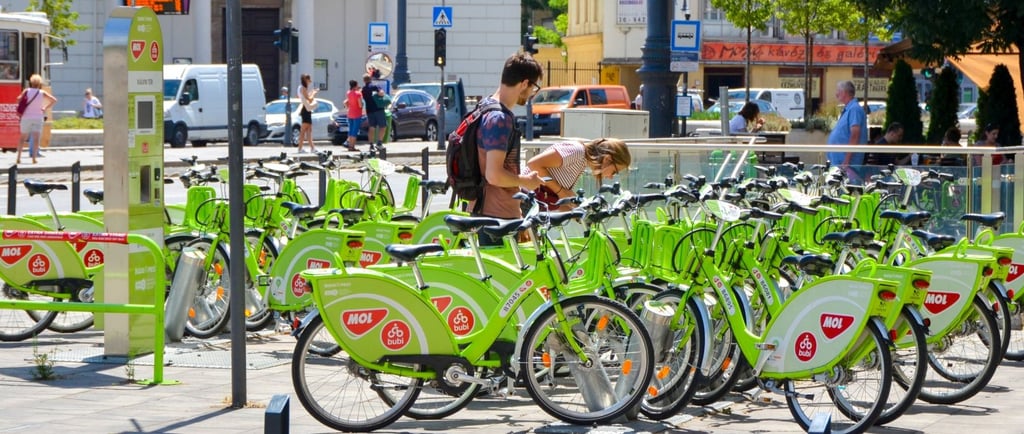
In practice, this means that while living car-free is the single most effective personal choice you can make, it’s only a realistic option for those who live in places with reliable public transit and safe bike infrastructure. The takeaway isn’t that our choices are meaningless, but that their greatest power lies in signaling demand and pushing for systemic change. As the WRI researchers put it, “Behavioral shifts aren’t just personal; they are also shaped and enabled by the world around us.” When we choose to bike, eat less meat, or push for better public transportation, we are not only reducing our own carbon footprint; we are also helping to create the political will for a world where everyone can live more sustainably.
This shift—from individual purity to collective pressure—finds an unexpected and powerful ally in a technology many fear.
2. Artificial Intelligence Might Be Our Strongest Climate Ally
The common narrative around artificial intelligence and the environment often focuses on its negatives, particularly the massive energy consumption of its data centers. While this is a valid concern that requires management, it overlooks a much bigger story: AI’s potential to be a net-positive force for decarbonization is immense.
A 2025 study in the journal npj Climate Action provides a stunning counter-narrative. It says that AI applications could cut global greenhouse gas emissions by 3.2 to 5.4 gigatons of CO₂-equivalent (GtCO₂e) each year by 2035. Critically, this figure is likely a conservative estimate, as it only accounts for AI’s impact in three sectors—power, food, and mobility. To put that in perspective, this reduction would more than offset the estimated increase in emissions from all of AI’s global activities, which is projected to be between 0.4 and 1.6 GtCO₂e.
AI accomplishes this not as a single magic bullet, but as a suite of optimizers working at immense scale. It can manage the fluctuating power from wind and solar to stabilize a renewable grid, accelerate the very discovery of new materials for cheaper EV batteries, and even nudge the behavior of millions through tools like Google Maps, which now defaults to the most fuel-efficient route. It can also help unlock climate finance in emerging markets by providing more accurate risk assessments, making it easier to deploy capital for crucial green projects.
While we must be vigilant about managing AI’s own environmental footprint, its potential as a powerful tool to accelerate the climate transition is one of the most significant and overlooked stories in technology today. And while AI helps us build a better future, another story of ingenuity is unfolding in how we survive the present.
3. Climate Disasters Are Getting Worse, But We’re Getting Better at Surviving Them
Here is a paradox that reframes our understanding of climate risk: even as climate change makes extreme weather events more frequent and severe, fewer people are dying from these disasters today than at any other point in history.
Author Kim Stanley Robinson gives a strong example of this trend. In 1970, Cyclone Bhola, a Category Four storm, struck the coast of what is now Bangladesh, killing an estimated 300,000 people. In 2023, Cyclone Mocha—a stronger, Category Five storm supercharged by climate change—hit the same region. This time, only a few hundred people died. That represents a thousandfold decrease in mortality in the face of a greater physical threat.
It was our ability to prepare for the storm that made the difference. The dramatic drop in deaths was the direct result of improved technology and adaptation, specifically the widespread implementation of early warning systems, advanced weather satellites, and the power of mass communication through smartphones. A single person in a village equipped with a phone can receive a warning and ensure their entire community reaches a shelter or higher ground in time.
This achievement proves our remarkable capacity to adapt to present dangers, but another story of ingenuity is unfolding around a far more audacious goal: preventing the catastrophic tipping points of the future.
4. Scientists Are Seriously Trying to Pin Antarctica’s Glaciers to the Seafloor
Some of the most ambitious climate solutions, often grouped under the heading “climate repair,” sound like they have been pulled directly from the pages of science fiction. However, these solutions are grounded in reality, marking a new frontier in proactive, planetary-scale intervention.
Ice Preservation, a non-profit coalition of glaciologists, technologists, and finance experts, is pursuing one of the most audacious solutions. Their goal is to stabilize the rapidly melting West Antarctic Ice Sheet by intervening directly at its fastest-moving and most vulnerable points: the Thwaites and Pine Island glaciers. If these glaciers collapse, they could trigger a cascade that leads to a devastating rise in global sea levels.
To prevent this, the team is exploring methods to slow the glaciers’ slide into the ocean. The proposed techniques include pumping out the meltwater from underneath the glaciers to increase friction with bedrock rock or installing arrays of “thermosiphons”—long, skinny heat pumps—to literally freeze the base of the ice to the rock it rests on.
This project embodies a profound shift in our climate posture: from mitigating damage to actively repairing the planet’s most vital systems. This audacious engineering speaks to our technical capacity, but the political and social will to act on this scale must come from a deeper, more universal place.
5. The Strongest Argument for Climate Action Has Nothing to Do With Politics
In a world deeply fractured by political polarization, the most effective call for climate action may be one that bypasses politics entirely. The endless debates over policy, economics, and ideology often obscure a simple, universal truth that connects us all.
A guest opinion piece from syracuse.com argues that this powerful common ground is the shared love we have for our children. It reframes the climate challenge not as a partisan issue, but as a fundamental, personal, and moral responsibility to protect the future for the next generation. This is a value that transcends party lines, national borders, and cultural divides. The author puts it simply and powerfully:
We love our children, and love is by far the most powerful motivator for action on climate change.
This perspective is a potent antidote to despair and division. It transforms the conversation from one of abstract threats and political enemies into one about safeguarding the world our children and grandchildren will inherit. The source suggests that this perspective provides a means to bridge the political divide, reminding us that, irrespective of our individual beliefs, we are bound together by a profound and fundamental obligation to the future generations.
Conclusion: A More Courageous Future
The climate story is not one of helpless individuals but of collective demand amplified by intelligent systems. It’s not just a tale of worsening disasters, but of resilient adaptation that outpaces them. And its driving force is not partisan fear but audacious engineering and a love for our children that transcends politics.
These truths don’t erase the immense challenges we face, but they do infuse our efforts with a new sense of possibility and purpose. They remind us that the story is not yet written and that our role is far from passive.
If the story of our climate future includes not only loss but also radical ingenuity, resilience, and shared purpose, what new chapter are we inspired to help write?
Sources:
1. WRI.org for the article “19 Ways to Help the Climate, Ranked”.
2. https://www.euronews.com/green/2026/01/19/carbon-sucking-fungi-and-forever-chemical-crackdowns-positive-environmental-stories-from-2 for the Euronews report on positive environmental stories.
3. syracuse.com for the guest opinion piece regarding climate change and its impact on children.
4. https://doi.org/10.1038/s44168-025-00252-3 (also referenced via nature.com) for the scientific perspective on AI in the climate transition.
5. Instagram (no specific full URL is included in the source text).
6. https://www.politico.com/newsletters/california-climate/2026/01/13/newsoms-200-million-ice-scraper-00726857?nname=california-climate&nid=00000189-315c-d8dd-a1ed-797dc9f10000&nrid=f51910a9-133f-48bf-82a6-9562f35b705d&_hsenc=p2ANqtz–4iLxp6zhe8oWR7KulB1b9voKRx6a0WlE92fjCI6bMt4u72nJOg6EXjMK3U8unvYvUJYkTOCuHeuJ7QVRtcOj507Atgw&_hsmi=398515385 for the Politico newsletter on California climate policy.
7. CPR Initiative (no specific URL is included in the source text) for the article “Remain in the Climate Treaty”.
8. The Multi-Terawatt Future of Photovoltaic Innovation (no specific URL is provided in the source text, though it summarizes an article titled “Historical and future learning for the new era of multi-terawatt photovoltaics”).
9. Climate Action Now (hosted on Substack) for the “Your Daily Dose of Climate Hope” interview with Kim Stanley Robinson.