
The Plan Was Never a Plan: What's Really Happening With Iran — And Why You Should Be Paying Attention
Based on Heather Cox Richardson from Letters from an American and reporting from the Wall Street Journal, ABC News, CBS News, Time, The Bulwark, Just Security, the New York Times, and Public Notice — March 10, 2026.
POLITICS
3/10/20265 min read
Part 1: They Thought It Would Be Easy
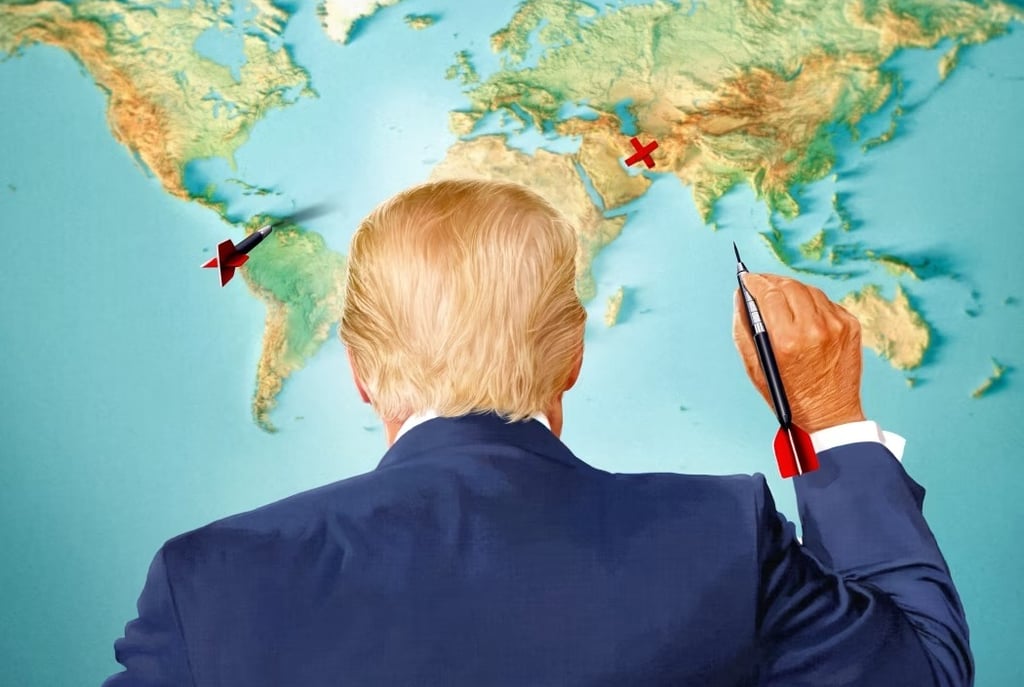
The Trump administration did not go to war with Iran. It went for a quick grab — a surgical strike designed to be over before most Americans finished their morning coffee.
The template was Venezuela. In January, U.S. forces captured President Nicolás Maduro in a surprise operation, installed a compliant replacement, and walked away with access to the country's oil. Fast. Clean. Profitable. Iran was supposed to be Venezuela, but bigger.
Strike the leadership. Watch the Iranian people rise up and install someone America could work with. No prolonged conflict, no congressional debate, no need to explain anything — because by the time anyone thought to ask, it would already be done.
That assumption didn't survive contact with reality.
The Israeli strikes that opened the campaign killed most of the figures the U.S. had identified as acceptable successors. The people America needed alive to hand power to were gone. Into that vacuum stepped Mojtaba Khamenei — the ayatollah's 56-year-old son, widely regarded as more hardline than his father. Trump declared him "unacceptable." Iran installed him anyway.
The administration had no theory for the war, no exit ramp, and no Plan B. They didn't think they needed one. And now, rather than managing a clean exit, they are reportedly considering backing the assassination of the very leader their operation helped put in place.
They went in without a plan. Created a worse situation. And the proposed solution is to go further in.
Part 2: Your Wallet, Your Crops, Your Safety
The Strait of Hormuz is a 21-mile-wide chokepoint at the mouth of the Persian Gulf. You may never have thought about it. Think about it now. Roughly 20% of the world's oil passes through it — and so does a significant share of the fertilizer that grows the food in your supermarket. It is not an abstraction. It is a physical bottleneck through which a massive portion of the global economy moves every single day.
That bottleneck is now closed.
The Wall Street Journal called it the worst energy crisis since the 1970s. Oil briefly crested $100 a barrel. Markets dropped. Then Trump told a CBS reporter Monday afternoon the war was "very complete, pretty much" — and markets recovered. After trading closed, he told House Republicans the war wasn't over and they needed "ultimate victory."
The financial security of millions of Americans swung on the gap between what a president said publicly at 2pm and what he said privately at 6pm. That isn't volatility. That's a shell game.
The food supply risk is quieter but potentially more lasting. Fertilizer doesn't make headlines like oil does. But if the inputs that produce crops can't move, eventually prices rise and supply shrinks. The disruption hasn't hit grocery shelves fully yet. Supply chains have lag time. The pressure is building upstream — and it will move downstream.
Then there is the safety question. After Khamenei's death on February 28, U.S. intelligence intercepted communications suggesting Iran activated covert operatives — sleeper assets — in multiple countries. When asked whether Americans should worry about attacks at home, Trump said: "I guess. Some people will die. When you go to war, some people will die."
There is no public preparedness campaign. No coordinated communication. Just a presidential shrug — while Iran is apparently moving assets into position.
Gulf states that spent the last year pledging billions in U.S. investments are now reconsidering. A prominent Dubai businessman addressed Trump directly: "Who gave you the authority to drag our region into a war?" Nvidia, Microsoft, and Oracle — all building major AI infrastructure across the Middle East — are quietly questioning whether those investments are still secure.
Ten days. One botched strike. Energy markets rattled, food supply chains under pressure, hostile intelligence assets activated, regional allies alienated, and billions in tech investment at risk. None of it was in the plan. There was no plan. And the people absorbing the consequences are not the people who made the decision.
Part 3: The Chaos at Home Is Part of the Same Story
When a foreign policy gamble fails, watch what happens domestically. The two aren't separate tracks. They are the same track. Pressure abroad finds its release valves at home — in political fractures, desperate messaging, and noise designed to keep you looking somewhere other than where the real problems are.
There is a lot of noise right now.
On the same day oil markets were swinging on presidential contradictions, the DOJ quietly released long-suppressed Epstein investigation documents — FBI interview summaries from a survivor who alleges Trump raped her at thirteen or fourteen. The initial release included only her testimony about Epstein. The interviews about Trump had been withheld. Some still are.
The White House response? Posting a pilot photo captioned "PATRIOTS ARE IN CONTROL" — a phrase carrying specific meaning in QAnon circles. That a presidential administration would respond to a rape allegation and a failing war by signaling to a conspiracy community tells you exactly where this White House believes its floor of support lies.
Then came the threats to his own party. Facing collapsing poll numbers on the economy, immigration, and national security — historically Republican strongholds — Trump demanded Senate Republicans break the filibuster to pass the SAVE Act, a sweeping voter restriction bill. His message was an ultimatum: pass this or he signs nothing else. Senate Majority Leader Thune — a Republican — doesn't have the votes and won't move to gut the filibuster to try.
This is a president threatening legislative gridlock to pass a bill his own party can't deliver. That isn't a strong hand. That is someone burning furniture to stay warm.
The House is no more stable. Speaker Johnson can afford to lose exactly one vote on the floor. On Monday, one member faced resignation calls over a scandal. Another left the party entirely to become an Independent. That is the margin they are governing with.
One thread runs through all of it — the war without a plan, the economic blowback, the suppressed documents, the QAnon signaling, the voting restriction ultimatum, the fracturing majority.
The thread isn't complexity. It's an administration that overestimated its control, is watching multiple situations deteriorate at once, and is responding with escalation and distraction rather than correction.
Congress has tools it hasn't used. It can refuse war funding. It can reassert war-making authority. It can demand documents and force accountability. Those levers exist. Most are sitting untouched while members wait to see which way the wind blows.
That waiting depends on public disengagement. Confusion and exhaustion aren't side effects of this moment — they are the strategy.
So here is what cuts through it:
Follow the economics, not just the headlines. Oil prices and market swings are the real-time scoreboard. When you understand what's moving and why, you are harder to mislead by an afternoon statement timed to close markets on an upswing.
Call your senators — specifically about war funding. When the request for expanded Iran funding arrives in Congress, constituent pressure on individual senators is one of the few direct levers available. Four minutes at senate.gov is not nothing.
Tell one person who isn't following this. Not to argue. Just to inform. The gap between what is actually happening and what the casual news consumer understands is enormous right now. Closing it — even by one conversation — matters.
They thought it would be easy, like Venezuela. It isn't. The gap between that assumption and the current reality is now everyone's problem.
Stay clear-eyed. Stay engaged. Don't let exhaustion do their work for them.