We Need Leaders NOW!

James Baldwin said “Not everything that is faced can be changed, but nothing can be changed until it is faced”. The Democratic Party and it’s leadership need to play hard ball for this election. Trump is taking the world stage everyday and continues to say whatever he wants and gets away with it. He bullies everyone around him and he has turned the White House into a house of lies and not the house of the people. We all know Trump only cares about himself and will do anything in his power to win or disrupt this election. Anything!
 
We need leaders who have the courage to confront Trump everyday, calling out his lies and the damage he is doing to the American people and our Democracy. Vice- President Joe Biden and Senator Kamala Harris are calling Trump out but we need a chorus of voices to do this. We need leaders who will demand that Republican Senators speak up when Trump breaks the law, becomes unhinged or puts people’s lives in danger. We need leaders who will demand that voter suppression stops.
 
We need leaders NOW to express their anger and outrage loud and clear!

All In: The Fight for Democracy’ Film Review: Stacey Abrams Documentary Is Timely and Terrifying

Lisa Cortés and Liz Garbus’ doc focuses on Abrams’ campaign for governor of Georgia but expands far past that to encompass nearly 200 years of voter suppression.

We haven’t had too many election years with quite this much attention paid to the process of voting, from allegations of voter suppression and voter fraud to President Trump’s recent suggestion that North Carolina voters cast ballots twice. But even before the act of voting became a hot-button issue in this particular election cycle, documentary filmmakers have turned their sights on the right to vote and the manipulations thereof.

Barak Goodman and Chris Durrance’s “Slay the Dragon,” which premiered at the 2019 Tribeca Film Festival and was released in April, went deep on the practice of gerrymandering. Dawn Porter’s “John Lewis: Good Trouble,” which was released by Magnolia and CNN in July, is a portrait of the late congressman that detours to explore the issues of voting rights for which he spent his lifetime crusading. And now, Lisa Cortés and Liz Garbus’ “All In: The Fight for Democracy,” which focuses on Stacey Abrams’ fight to become governor of Georgia but expands far past that to encompass nearly 200 years of every type of voter suppression.

It is the most comprehensive and far-reaching of the recent voting-rights docs, and with the election approaching it’s an uncommonly timely and urgent document of the many ways in which the foundations of democracy can be thwarted. So exhaustive that at times it’s exhausting, it’ll terrify anybody who’s worried that the true danger in this year’s election is voter suppression, not voter fraud.

Stacey Abrams is one of the producers of the film, which is organized around her run for governor against Brian Kemp – who, as Georgia’s sitting secretary of state, also oversaw the election in which he narrowly defeated her amid numerous examples of the closing of polling places and the purging of voter rolls. And she’s one of its key talking heads, all of whom are positioned at long tables with deep rooms behind them; the settings make it look like they’re lecturing or testifying before congress, and lend an air of gravitas to what’s being said and to the people who are saying it.

Of course, the issue deserves all the gravitas it can get, and the film takes it all the way back to the election of George Washington, when only six percent of Americans — white, male property owners – were eligible to vote. From there, it delves into the 15th Amendment in 1870, which gave Black men the right to vote (women were still excluded) and led to African-American congressmen elected at state and national levels.

In the Reconstruction era that followed the Civil War, the film points out, more than two-thirds of eligible Black people registered to vote in some southern states. But after congress agreed to withdraw troops from the South to effectively end Reconstruction, the states (initially in the South, but later elsewhere) began to find ways to exclude them from the voting rolls: poll taxes, literacy tests that were designed to be almost impossible to pass, then felony disenfranchisement coupled with statues that made arrests and convictions easy.

By the end of World War II, “All In” says, registration in the South had fallen to three percent of eligible African-Americans. And organizations like the Ku Klux Klan intimidated those who were registered. For instance, Maceo Snipes, a WWII veteran, was the only Black person to vote in Taylor County, Georgia in 1946, and was shot and killed by a group of men on his front porch soon after casting his ballot.

“All In” suggests that Martin Luther King’s march over the Edmund Pettis Bridge in 1965 was a turning point, when graphic footage of Alabama police savagely beating peaceful protestors woke up Americans and spurred President Lyndon Johnson to push for and get passed the Voting Rights Act of 1965.

At this point, the film’s clear storytelling gets a little diffuse; the movie alternates between sequences featuring Abrams’ race for governor with sections from the past, but then there are time jumps within the time jumps, and a sense that “All In” really is trying to fit it all in.

And there’s a lot to fit in, notably in recent years when opponents of the Voting Rights Act seized on Barack Obama’s election as a way to undermine the act by claiming it was no longer necessary. At the same time, says author Carol Anderson, the coalition of 15 million new voters brought to the polls to vote for Obama became “the hit list for voter suppression.”

The Voting Rights Act had been extended many times over the years, and always proudly signed by Republican presidents. But behind the scenes, a strategy to constantly challenge elements of the law in court finally hit pay dirt in 2013, when the Supreme Court under Chief Justice John Roberts – whose mentor was former Chief Justice William Renquist, once one of the leaders in voter suppression in Arizona according to the film – invalidated many provisions of the bill.

In the aftermath, “the floodgates” opened to voter ID laws that made it particularly hard for minorities to be registered, as well as purges of the voting rolls, poll closures and aggressive gerrymandering.

“Intimidation from the government is real, it is powerful, it’s because of changing demographics and the fear of what this larger vote can mean,” says Anderson.

All of this is a huge amount to cover, and the film strains to do it. But even if it feels a little disorganized at times, and occasionally overwhelmed by the mass of material it’s trying to cover, “All In” leaves the unmistakable impression that there is an organized effort to prevent some citizens from voting, and that President Trump’s claims of widespread voter fraud – which his own commission could not document – is part of that effort.

Meet the Jewish Woman Suing Neo-Nazis For a Living

Meet the Jewish Woman Suing Neo-Nazis For a Living By Lior Zaltzman

What do you do when you get a call from an iconic human rights lawyer, asking you to help her sue some Nazis? Well, if you’re Amy Spitalnick, you say yes, of course.

Spitalnick, 34, is the executive director of Integrity First for America, the nonprofit group that’s taking on the neo-Nazis who marched at the Unite the Right rally in Charlottesville.  On behalf of community members of that Virginia city, her organization is suing two dozen individuals and groups connected to the rally — the one where protestors were shouting, “Jews will not replace us” — back in August 2017.  The main defendant of the case, Jason Kessler, was a member of the Proud Boys, the white nationalist hate group president Trump told to “stand back and stand by” at the first presidential debate this week. Another, Andrew Anglin who runs the Daily Stormer, construed Trump’s debate comment as a call for a race war.

This case, which The New York Times called “the most sweeping lawsuit against the promoters of the Charlottesville white power rally,” is slated to stand trial in April of 2021.

Back in 2017, Spitalnick was the communications director and senior policy adviser to the New York Attorney General. She was at her sister’s wedding shower when she learned that a white supremacist plowed his car into a crowd of peaceful protesters in Charlottesville, injuring 28 people and killing 32-year-old Heather Heyer. It was a terrifying and memorable moment for Spitalnick.

“I’m the granddaughter of Holocaust survivors and we had surrounded the shower with photos of our family, including all the photos of my grandparents,” Spitalnick tells me in a telephone interview. “And I remember sitting on one of the folding chairs, as people were leaving, on the phone with the Attorney General, writing the statement that we put out, and thinking how horrifying and baffling it was, that in America in 2017, neo-Nazis were so emboldened that they could murder someone on the streets of an American city.”

In the course of her work for the Attorney General, Spitalnick had met Roberta Kaplan — one of the lead attorneys of the Edie Windsor case, which paved the way for marriage equality in 2013. It was Kaplan who first called Spitalnick, asking if she wanted to help her sue Nazis. Kaplan had put together a case on behalf of community members in Charlottesville to hold accountable some of the individuals and groups that brought terror to that town. Thinking of how Nazis murdered almost all of her grandparents’ families, Spitalnick joined IFA as its executive director.

“Even before we go to trial, we’ve seen very real financial and legal and operational consequences for these groups and leaders,” Spitalnick says. “Richard Spencer, who’s one of our defendants, said the case is ‘financially crippling’. Groups like League of the South have said they can’t open a new building because of our case. Two defendants have had bench warrants issued for their arrest. Others have faced tens of thousands of dollars in sanctions and so they’re already facing very real financial, legal, and operational consequences even before trial.”

“And when we go to trial and win very large civil judgments against them, this case really has the potential to totally undercut, bankrupt, and dismantle these groups, which is not only about their own ability to operate, but the deterrent effect it will have on the broader movement,” Spitalnick explains.

Of course, the main goal of the case is to get justice for the injured residents of Charlottesville. But there’s also another, more lofty goal: “This is something that our lead counsel Robbie Kaplan often talks about… Every decade or so there’s a trial in this country that is about more than the trial itself, and serves as the sort of public reckoning [and] public education on a critical issue,” Spitalnick says.

She continues, “We believe that this case can be that case; that moment to really help sharpen and focus the public’s understanding of the crisis of violent white supremacy.”

This crisis, Spitalnick says, is not political. She sees it as “a fundamental question of security and democracy. And what we’re talking about here is one of the most dire threats to our communities… And they’re only becoming more and more emboldened.”

Spitalnick says there’s a “clear line” that connects the Charlottesville rally to the other white supremacist, racist, and anti-Semitic violence that’s occurred in recent years, including the Tree of Life synagogue shooting in Pittsburgh and the shooter in Christchurch, New Zealand who targeted Muslims and mosques.

Social media, she says, plays a crucial role: “The Charlottesville violence was planned extensively online, and the basis for our lawsuit are these online chats, in which they discuss every detail down to hitting protesters with cars,” she says. “Even again, last night, the Proud Boys were immediately online, gleefully celebrating the President’s comments, and turning it into their new slogan.”

“It’s important to point out this isn’t happening in a vacuum,” Spitalnick adds. “There have been active disinvestments from the federal government in the types of policies and work that is meant to combat extremists.”

This has nothing to do with free speech, she cautions. “If these individuals and groups had simply gone to Charlottesville, and stood on the street corner with their vile, racist, anti-Semitic signs and their swastikas and chanted the awful things that they did, they would have had every right to do so,” she says. “But that’s not what they did. They, after planning for months in advance on social media and elsewhere, went to Charlottesville with the intent to bring racist violence to that community, and target people based on their race, their religion, and their willingness to defend the rights of others. That is not something that’s protected by free speech.”

As dark as it all sounds, fortunately, there’s something we can all do about it. “Broadly, it’s so important that the issue of violent white supremacy and violent extremism not fall off people’s radars…” Spitalnick says. “And it’s so important that we hold our officials accountable on the federal, state, and local level.”

“There’s also a lot we can do as consumers,” she adds. “We should be holding social media accountable. There is no obligation by any social media company to give a platform to violent extremism. The First Amendment does not require private companies to give a platform to extremism — no matter what they might say… And as consumers, we should use our voices and the power that we have to hold the private sector accountable.”

Of course, there’s a real danger to the work Spitalnick does. She and her colleagues get a lot of violent and hateful threats, many connected to the Jewish identity of many of their team members. “Security is our biggest priority, the biggest line item in IFA’s budget,” she says. “It’s fairly rare for a civil case to require this level of security, or, frankly, any real security. But most of the cases don’t involve neo-Nazi defendants.”

“It’s so easy and understandable to feel hopeless and helpless, and scared and angry in this moment — and I certainly do at times,” Spitalnick tells me when I ask how she keeps herself motivated. “But I think a lot about my grandparents’ generation and the fact that, unlike their generation, we live in a country that is supposed to be governed by the rule of law, that has a justice system that has laws, like the ones we’re using to fight back and hold accountable those who threaten justice who seek to undermine justice and civil rights.”

“We have been, knock on wood, or, you know, not to give it kinehora as my grandmother would say, successful at doing that so far in this case, if you look at the impact it’s had,” Spitalnick says. “And so we are going to keep fighting to use that rule of law and use that justice system and to protect that rule of law and to protect our justice system, which is even more urgent over the last few weeks.”

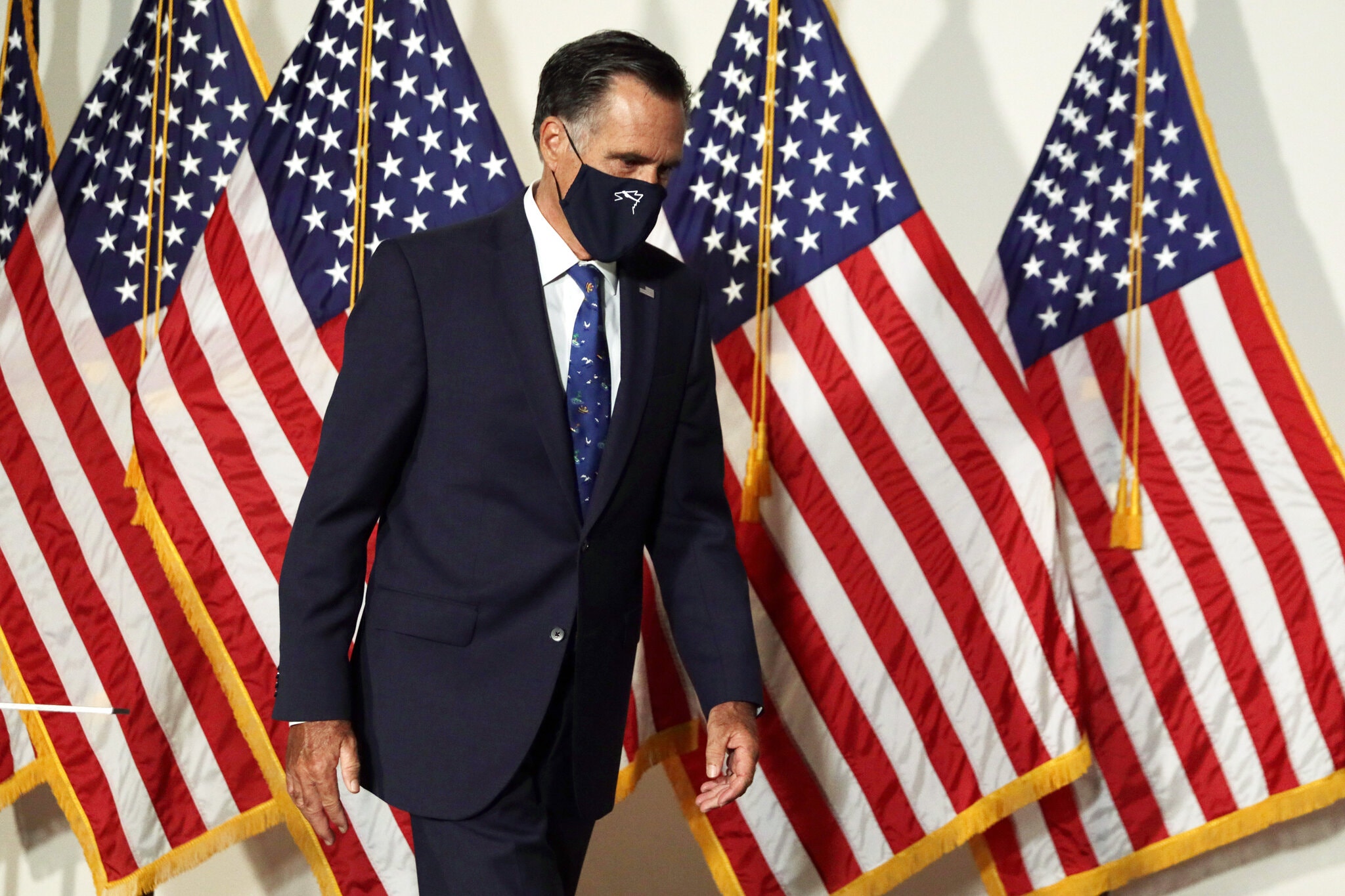
An Open Letter to Mitt Romney by By Bret Stephens

Dear Senator Romney,

It isn’t hard to guess what you’re hearing from most of your fellow Republicans as they try to persuade you to cast a vote for President Trump’s Supreme Court nominee before the election. In a nutshell, it’s this: “The Democrats didn’t play by the rules in the past, and you’d be a fool to think they will play by them in the future. So why should we not fill a seat that’s constitutionally ours to have?”

It’s bad advice. Bad for the country. Bad for the party. Bad for you.

Lest you think I don’t get the argument, let me rehearse it. There used to be a bipartisan tradition of confirming well-qualified nominees for the court. Democrats trashed it with their trashing of Robert Bork. There used to be a bipartisan tradition of approving well-qualified nominees for lower courts. Democrats trashed it by filibustering George W. Bush’s appellate court nominees. There used to be a bipartisan tradition of respecting the filibuster. Democrats trashed it by blowing up the filibuster in 2013. There used to be a tradition of the Judiciary Committee treating nominees with a sense of fairness. Democrats trashed it when they used uncorroborated allegations to try to block and besmirch Brett Kavanaugh.

In short, whatever sin is involved in moving forward on Trump’s next nominee this close to a presidential election, it’s a venial one compared with what the other side has done, and may still do.

Nor, I imagine, is that everything your caucus colleagues are telling you. The left, they say, is engaged in a full-scale attack on traditional American values, from freedom of speech to the presumption of innocence to the right to bear arms to the need to enforce our immigration laws to the broader concept of law and order. These things are too important to hazard on a bare 5-4 conservative majority on the Supreme Court, especially now that John Roberts has succumbed to the lure of being the swing vote. A 6-3 majority might be the only sure defense against this cultural revolution for a generation to come.

So I get the analysis. And I agree that Democrats have a lot to answer for, the Kavanaugh circus in particular.

But the questions you might helpfully ask yourself are these: When did any person or party ever get clean by following another into the gutter? And if decades of Democratic transgressions against Senate norms are bad, how are those norms improved by Republican transgressions against them?

One answer you might hear to this is that it’s no sin for a president to exercise his constitutional right to nominate a judge at any point in his tenure or for the Senate to vote on the nomination. Ruth Bader Ginsburg’s confirmation process, after all, took a grand total of some 50 days.

Yet it was Republicans who unilaterally changed the norms in 2016 to block Merrick Garland’s nomination to fill Antonin Scalia’s seat. And people like Lindsey Graham promised they would live by the new norms, even if it was politically inconvenient. It’s a promise Graham is reneging on, but has a moral obligation to honor.

I realize your decision may seem more difficult if Trump nominates a judge whose philosophy and character you admire. No doubt you’d like to see such a judge on the court. But refusing to cast a vote until next year merely delays her elevation by a few months — assuming, that is, that Trump wins and Republicans retain their Senate majority.

This, however, raises a philosophical consideration. If a central conservative complaint about the federal judiciary is that it has arrogated too many powers that ought to be in the hands of the people, how can conservatives justify entrenching their power in the courts in the expectation that they’re unlikely to win at the polls? The Garland rule (or, if you prefer, the Biden rule) may have had no basis in the Constitution, but at least it was consonant with the populist drift in conservative thinking.

Now you have a Republican Party that seeks to advance its notions of judicial modesty and democratic accountability by the most immodest means imaginable, all in order to lock in conservative control over the least democratic branch of government. Wouldn’t the better Republican way be to try to win more elections with better candidates?

I respect the fact that you’re a pragmatic politician who values the views of your colleagues and constituents — most of whom, I suspect, would likely favor rapid confirmation of the nominee. But as you so eloquently put it in February, when you cast the lone G.O.P. vote to convict President Trump in his impeachment trial, “freedom itself is dependent on the strength and vitality of our national character.” A Republican Party that lies and bamboozles voters contributes nothing to improving that character.

Senator, it may not have been your destiny to be president. But it’s still yours to show Americans what it means to be courageous by way of sound and independent judgment. Your decision alone won’t make all the difference; three Republican senators would need to join you. But — with your colleagues Susan Collins and Lisa Murkowski — it will show the way.

Justice Ruth Ginsburg’s Legacy

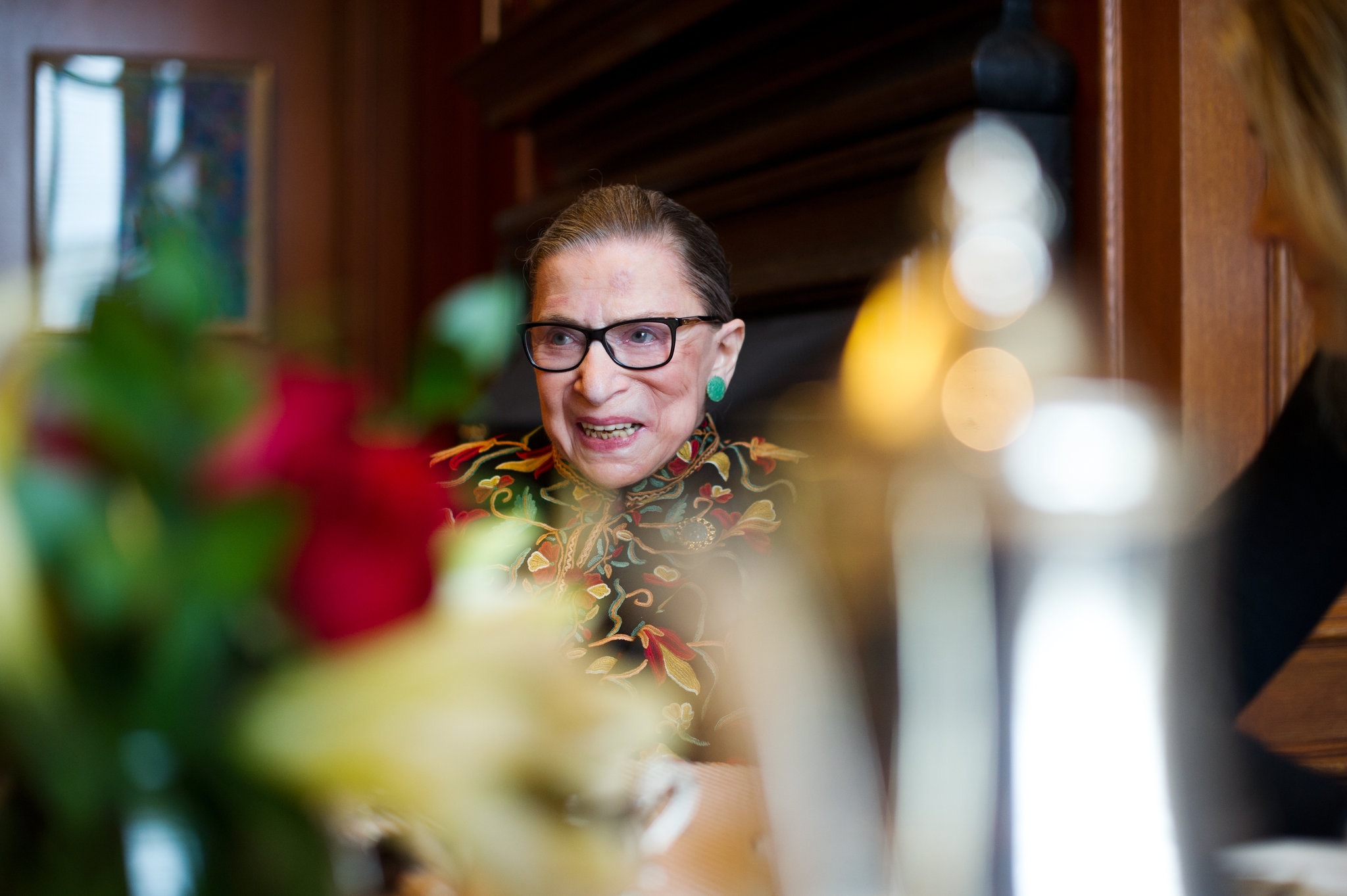
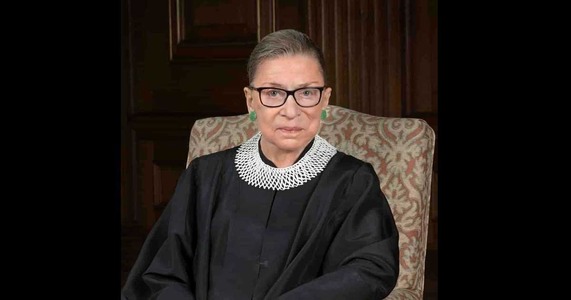
Justice Ruth Ginsburg did her best to stay in her seat in the Supreme Court before the election for all Americans. We must honor her by doing everything we can to make sure this happens.

The GOPers may not have the votes to confirm a replacement for the late, great Ruth Bader Ginsburg. Sens Murkowski and Grassley are on clear record as saying they will not vote for a new justice this year. Sen Collins has clearly stated that she will not do so before the election. If those three stay true to their word, the Rs are at 50, one short of a clean vote for cloture to break a Democratic filibuster before Election Day and 51 after Election Day through the end of the session, and Sen Grassley is on the Judiciary Committee, so they may not even be able to get through the Judiciary Committee process by then anyway. Those totals would be 49 and 50, respectively, if Sen Romney joins with his own commitment. If Mark Kelly defeats Sen McSally in AZ, as he is favored to, he would be seated on November 30, 2020, making the totals 48 and 49, from December 1 to the start of the new session, depending on Sen Collins’ always wavering resolve. I know that leaves a lot of “ifs” but, in the best case (we win the Senate and the presidency), that leaves the GOP with a maximum window of only 27 days – from November 3 and 30, including Thanksgiving, when an executive tiebreaker can theoretically be used to break a cloture filibuster. And that assumes Sen Collins’ statement is interpreted to say she may vote for a scotus nominee anytime after Election Day, and that we couldn’t get even one more GOPer to commit. So, counting Romney on our side (I really hope I’m not wrong to assume he’s persuadable on this point), this is how this could break down:
– Through 11/3, 45 days from now: max 49 GOP votes available
– 11/3-11/30, 27 days: max 50 GOP votes available, unless Collins extends her commitment
– 12/1-1/3 if Kelly wins, 34 days: Max 49 GOP votes available or 48 depending on Collins
– total: 106 days
Obviously, if we lose the election, any delay past 106 days is pointless.
Based on this, I think we should do the following:
– call our senators, R or D, and get them to commit to filibuster a GOP nominee; note that the filibuster is required because otherwise the GOP still holds the majority of quorum needed for a cloture vote (as low as 47) short of a filibuster (50+1)
– use this to drive turnout to capture the Senate in our campaign and GoTV efforts
– for voters in AK, ME, and IA, call on Sens Grassley, Murkowski and Collins to reaffirm their prior commitments
– for voters in ME, call on Sen Collins to extend her commitment past Election Day, bearing in mind, God willing, that she may be a lame duck sometime in that interval
– for voters in UT, call on Sen Romney to join Sens Grassley and Murkowski in committing to no vote this session
– call for additional GOP defections
– donate, support, phone bank and canvass especially to Mark Kelly in AZ
– call on VP Biden and D Senate leadership to commit to pack the court as a credible threat if and only if the GOP insists on a cloture vote
Arguments to senators should include the following:
– precedent: a vote on a scotus nominee should not happen this close to end of session
– fairness: Merrick Garland
– prior commitments: Sens Collins, Grassley and Murkowski
– legitimacy: a confirmation this year would delegitimize Scotus and the new GOP justice, further destabilizing the country
– turnout: any GOP push to pass a nominee out of Judiciary between now and 11/3 would galvanize Democratic turnout and further endanger GOP members
– threat (only with VP Biden and Sen Schumer’s commitment on this point): we will answer unfairness with unfairness and push to pack the court if they push to confirm this session
I think I have this right, but let me know please if my analysis is wrong in any way. This is going to be a tough fight, regardless, and, no I don’t think we can trust any of those four GOPers to follow through. But we don’t have any other choice at this point.
NB: Sen Graham of SC is intentionally omitted, because he is a liar.
Day 896 American Child Hostage Crisis

Do not fill Ruth Bader Ginsburg’s Supreme Court seat until after the 2021 inauguration

The GOPers may not have the votes to confirm a replacement for the late, great Ruth Bader Ginsburg. Sens Murkowski and Grassley are on clear record as saying they will not vote for a new justice this year. Sen Collins has clearly stated that she will not do so before the election. If those three stay true to their word, the Rs are at 50, one short of a clean vote for cloture to break a Democratic filibuster before Election Day and 51 after Election Day through the end of the session, and Sen Grassley is on the Judiciary Committee, so they may not even be able to get through the Judiciary Committee process by then anyway. Those totals would be 49 and 50, respectively, if Sen Romney joins with his own commitment. If Mark Kelly defeats Sen McSally in AZ, as he is favored to, he would be seated on November 30, 2020, making the totals 48 and 49, from December 1 to the start of the new session, depending on Sen Collins’ always wavering resolve. I know that leaves a lot of “ifs” but, in the best case (we win the Senate and the presidency), that leaves the GOP with a maximum window of only 27 days – from November 3 and 30, including Thanksgiving, when an executive tiebreaker can theoretically be used to break a cloture filibuster. And that assumes Sen Collins’ statement is interpreted to say she may vote for a scotus nominee anytime after Election Day, and that we couldn’t get even one more GOPer to commit. So, counting Romney on our side (I really hope I’m not wrong to assume he’s persuadable on this point), this is how this could break down:
– Through 11/3, 45 days from now: max 49 GOP votes available
– 11/3-11/30, 27 days: max 50 GOP votes available, unless Collins extends her commitment
– 12/1-1/3 if Kelly wins, 34 days: Max 49 GOP votes available or 48 depending on Collins
– total: 106 days
Obviously, if we lose the election, any delay past 106 days is pointless.
Based on this, I think we should do the following:
– call our senators, R or D, and get them to commit to filibuster a GOP nominee; note that the filibuster is required because otherwise the GOP still holds the majority of quorum needed for a cloture vote (as low as 47) short of a filibuster (50+1)
– use this to drive turnout to capture the Senate in our campaign and GoTV efforts
– for voters in AK, ME, and IA, call on Sens Grassley, Murkowski and Collins to reaffirm their prior commitments
– for voters in ME, call on Sen Collins to extend her commitment past Election Day, bearing in mind, God willing, that she may be a lame duck sometime in that interval
– for voters in UT, call on Sen Romney to join Sens Grassley and Murkowski in committing to no vote this session
– call for additional GOP defections
– donate, support, phone bank and canvass especially to Mark Kelly in AZ
– call on VP Biden and D Senate leadership to commit to pack the court as a credible threat if and only if the GOP insists on a cloture vote
Arguments to senators should include the following:
– precedent: a vote on a scotus nominee should not happen this close to end of session
– fairness: Merrick Garland
– prior commitments: Sens Collins, Grassley and Murkowski
– legitimacy: a confirmation this year would delegitimize Scotus and the new GOP justice, further destabilizing the country
– turnout: any GOP push to pass a nominee out of Judiciary between now and 11/3 would galvanize Democratic turnout and further endanger GOP members
– threat (only with VP Biden and Sen Schumer’s commitment on this point): we will answer unfairness with unfairness and push to pack the court if they push to confirm this session
I think I have this right, but let me know please if my analysis is wrong in any way. This is going to be a tough fight, regardless, and, no I don’t think we can trust any of those four GOPers to follow through. But we don’t have any other choice at this point.
NB: Sen Graham of SC is intentionally omitted, because he is a liar.
Day 896 American Child Hostage Crisis
Here is how you can help stop the Republican-led Senate from confirming the next Supreme Court Justice.
Call these 4 Republicans Senators. Grassley and Murkowski very recently said they would not vote to confirm. Collins and Romney supposedly more moderate than most Republicans.
Chuck Grassley – (202) 224-3744
Lisa Murkowski – (202) 224-6665
Susan Collins – (207) 780-3575
Mitt Romney – (202) 224-5251
Here are other Republicans who have been on record said they wouldn’t vote to confirm as well. Obviously, some of the names on this list are known as flip floppers, and some of these that said what they said in 2016 to justify their stance on NOT holding the voting for Justice Merrick Garland. We can call or use social media to put pressure on them.
Cory Gardner (R-Col.) – (202) 224-5941
John Cornyn (R-Texas) – 202 224-2934
Ted Cruz (R-Texas) – (202) 224-5922
Lindsey Graham (R-S.C.) – (202) 224-5972
Marco Rubio (R-Fla.) – (202) 224-3041
Jim Inhofe (R-Okla.) – (202) 224-4721
Joni Ernst (R-Iowa) – (202) 224-3254
Thom Tillis (R-N.C.) – (202) 224-6342
David Perdue (R-Ga.) – (202) 224-3521
Tim Scott (R-S.C.) – (202) 224-6121
Ron Johnson (R-Wisc.) – (202) 224-5323
Pat Toomey (R-Penn.) – (202) 224-4254
Richard Burr (R-N.C.) – (202) 224-3154
Roy Blunt (R-Mo.) – (202) 224-5721
John Hoeven (R-N.D.) – (202) 224-2551
Rob Portman (R-Ohio) – (202) 224-3353
Feel free to copy and paste this on your wall, flood the other social media sites so more people can call and put the pressure on these Senators to stay true to their words.
And donate to democrats — especially senate candidates –in order to swing the senate BLUE.

When Good People Don’t Act, Evil Reigns

Stop thinking that the horrors of the world will simply work themselves out. By  Sept. 13, 2020

I have often wondered how major world tragedies and horrors were allowed to unfold. Where were all the good people, those who objected or should have? How did life simply go on with a horror in their midst?

How did the trans-Atlantic slave trade play out over hundreds of years? How did slavery thrive in this country? How was the Holocaust allowed to happen? How did the genocides in Rwanda or Darfur come to be?

There is, of course, nearly always an explanation. Often it is official policy; often it is driven by propaganda. But I’m more concerned with how people in the society considered these events at the time, and how any semblance of normalcy could be maintained while events unfolded.

It turns out that our current era is providing the unsettling answer: It was easy.

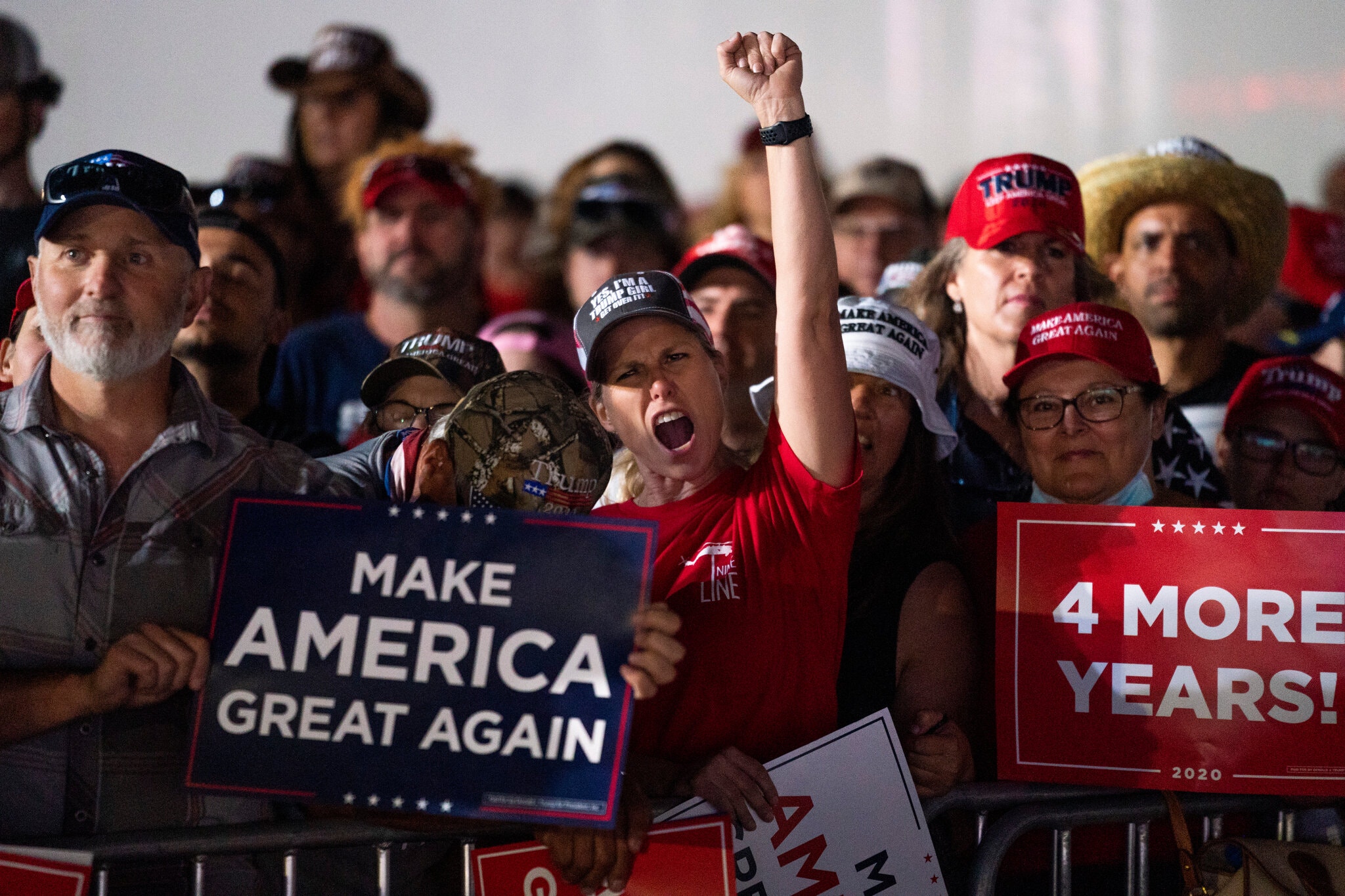
As I write this, nearly two hundred thousand Americans have died — many of them needlessly — from Covid-19, in large part because the Trump administration has refused to sufficiently address the crisis, be honest with the American people and urge caution. Instead, Trump has lied about the virus, downplayed it, resisted scientists’ warnings and continues to hold rallies with no social distancing and no mask requirements.

Things are poised to get worse: Models now predict that the number of Americans killed by the virus could double between now and Jan. 1. According to the Institute for Health Metrics and Evaluation at the University of Washington:

“We expect the daily death rate in the U.S., because of seasonality and declining public vigilance, to reach nearly 3,000 a day in December. Cumulative deaths expected by Jan. 1 are 415,090; this is 222,522 deaths from now until the end of the year.”

And yet, Americans still flock to Trump rallies, Republicans continue to defend his pandemic response and it is not clear that he will be defeated in November. We are, in many states, back to restaurants and bars, schools and churches, gyms and spas. It’s not as if we don’t know that there is a deadly virus being transmitted through the air, but it seems as though many Americans, weary of restrictions, have simply made their peace with it.

We have a climate crisis that continues to worsen. Storms are getting stronger. Droughts are severe. Rivers are flooding. The sea level is rising. And yet, we don’t do nearly enough to stop it and may not do enough before it’s too late to do anything.

Right now much of the West Coast is ablaze with hellish scenes of orange skies, and yet too many of us entertain climate change deniers, or, perhaps worse, know well the gravity and precariousness of the situation and still haven’t changed our habits or voted for the candidates with the boldest visions to save the planet.

Right now, China has detained as many as one million mostly Muslim citizens, in indoctrination camps, hoping to remold many into what The New York Times called “loyal blue-collar workers to supply Chinese factories with cheap labor.”

And yet, the world does little. Many look away. Life goes on.

This is how these catastrophes happen — in full sight — and people with full knowledge don’t revolt. People sometimes think that the issue is far away, or if it’s not, that it’s too big and they are too powerless.

They think provincially, or even parochially, concerned with their own house, their own street, their own community.

“It’s too bad that those children are in cages, but I can’t worry about that now, the clothes in the dryer need folding.”

“It’s too bad that an unarmed Black man just got shot by the police, but I can’t worry about that now, the yard needs mowing.”

I guess in some ways this impulse is self-protecting, preventing the mind and spirit from becoming overwhelmed with angst and rage. But, the result is that evil — as a person or system — rampages, unchecked, taking your personal laissez-faire as public license.

If you don’t complain, you condone.

But this mustn’t be. Stop thinking of yourself as weak or helpless. Stop thinking that things will simply work themselves out. Stop thinking that evil will stop at the gate and not trample your own garden.

Gather the energy. Gather your neighbor. Fight, vote, email, post. Do all you can to stand up for the vulnerable, for the oppressed, for the planet itself. Don’t let history record this moment as it has recorded too many others: a time when good people did too little to confront wickedness and disaster.

As Edmund Burke wrote in his 1770 “Thoughts on the Cause of the Present Discontents”: “When bad men combine, the good must associate; else they will fall, one by one, an unpitied sacrifice in a contemptible struggle.”

But you may be more familiar with another quote often attributed to Burke: “The only thing necessary for the triumph of evil is for good men to do nothing.”

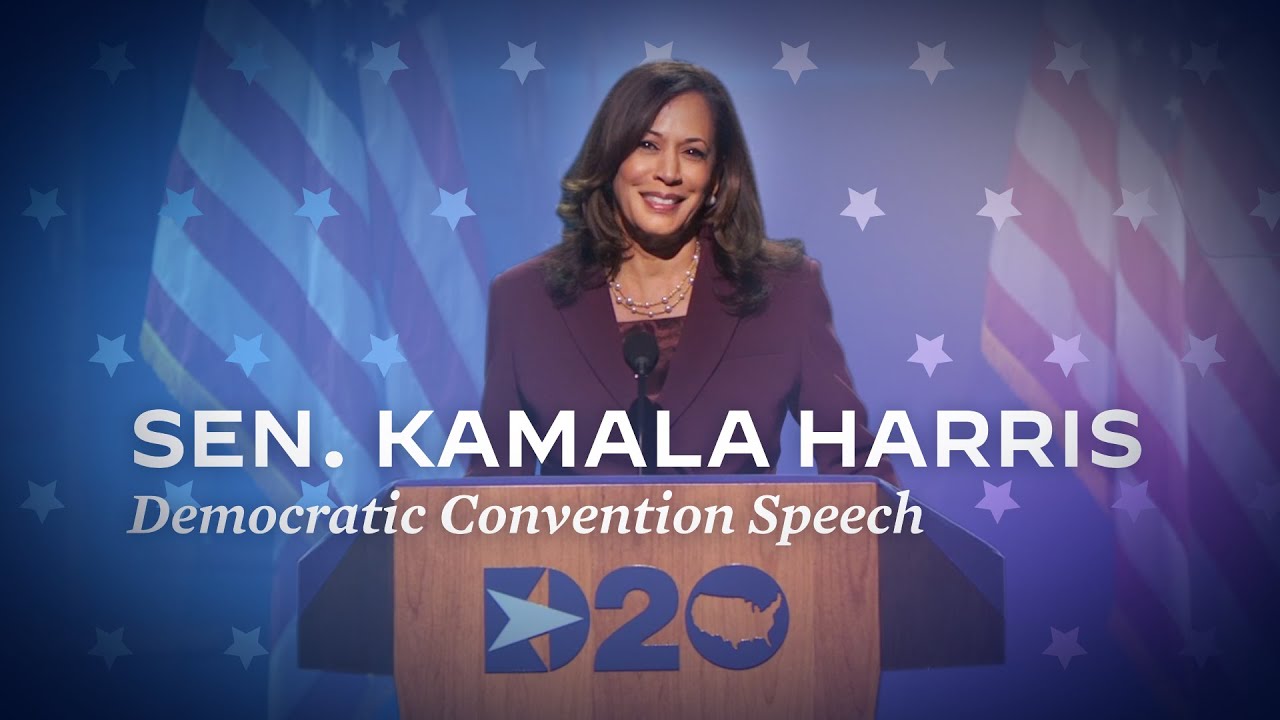
Democratic Vice Presidential nominee Kamala Harris’ speech from the 2020 Democratic National Convention

Greetings America.
It is truly an honor to be speaking with you.
That I am here tonight is a testament to the dedication of generations before me. Women and men who believed so fiercely in the promise of equality, liberty, and justice for all.
This week marks the 100th anniversary of the passage of the 19th amendment. And we celebrate the women who fought for that right.
Yet so many of the Black women who helped secure that victory were still prohibited from voting, long after its ratification.
But they were undeterred.
Without fanfare or recognition, they organized, testified, rallied, marched, and fought—not just for their vote, but for a seat at the table. These women and the generations that followed worked to make democracy and opportunity real in the lives of all of us who followed.
They paved the way for the trailblazing leadership of Barack Obama and Hillary Clinton.
And these women inspired us to pick up the torch, and fight on.
Women like Mary Church Terrell and Mary McCleod Bethune. Fannie Lou Hamer and Diane Nash. Constance Baker Motley and Shirley Chisholm.
We’re not often taught their stories. But as Americans, we all stand on their shoulders.
There’s another woman, whose name isn’t known, whose story isn’t shared. Another woman whose shoulders I stand on. And that’s my mother—Shyamala Gopalan Harris.
She came here from India at age 19 to pursue her dream of curing cancer. At the University of California Berkeley, she met my father, Donald Harris—who had come from Jamaica to study economics.
They fell in love in that most American way—while marching together for justice in the civil rights movement of the 1960s.
In the streets of Oakland and Berkeley, I got a stroller’s-eye view of people getting into what the great John Lewis called “good trouble.”
When I was 5, my parents split and my mother raised us mostly on her own. Like so many mothers, she worked around the clock to make it work—packing lunches before we woke up— and paying bills after we went to bed. Helping us with homework at the kitchen table—and shuttling us to church for choir practice.
She made it look easy, though I know it never was.
My mother instilled in my sister, Maya, and me the values that would chart the course of our lives.
She raised us to be proud, strong Black women. And she raised us to know and be proud of our Indian heritage.
She taught us to put family first—the family you’re born into and the family you choose.
Family, is my husband Doug, who I met on a blind date set up by my best friend. Family is our beautiful children, Cole and Ella, who as you just heard, call me Momala. Family is my sister. Family is my best friend, my nieces and my godchildren. Family is my uncles, my aunts—my chitthis. Family is Mrs. Shelton—my second mother who lived two doors down and helped raise me. Family is my beloved Alpha Kappa Alpha…our Divine 9…and my HBCU brothers and sisters. Family is the friends I turned to when my mother—the most important person in my life—passed away from cancer.
And even as she taught us to keep our family at the center of our world, she also pushed us to see a world beyond ourselves.
She taught us to be conscious and compassionate about the struggles of all people. To believe public service is a noble cause and the fight for justice is a shared responsibility.
That led me to become a lawyer, a District Attorney, Attorney General, and a United States Senator.
And at every step of the way, I’ve been guided by the words I spoke from the first time I stood in a courtroom: Kamala Harris, For the People.
I’ve fought for children, and survivors of sexual assault. I’ve fought against transnational gangs. I took on the biggest banks, and helped take down one of the biggest for-profit colleges.
I know a predator when I see one.
My mother taught me that service to others gives life purpose and meaning. And oh, how I wish she were here tonight but I know she’s looking down on me from above. I keep thinking about that 25-year-old Indian woman—all of five feet tall—who gave birth to me at Kaiser Hospital in Oakland, California.
On that day, she probably could have never imagined that I would be standing before you now speaking these words: I accept your nomination for Vice President of the United States of America.
I do so, committed to the values she taught me. To the Word that teaches me to walk by faith, and not by sight. And to a vision passed on through generations of Americans—one that Joe Biden shares. A vision of our nation as a Beloved Community—where all are welcome, no matter what we look like, where we come from, or who we love.
A country where we may not agree on every detail, but we are united by the fundamental belief that every human being is of infinite worth, deserving of compassion, dignity and respect.
A country where we look out for one another, where we rise and fall as one, where we face our challenges, and celebrate our triumphs—together.
Today… that country feels distant.
Donald Trump’s failure of leadership has cost lives and livelihoods.
If you’re a parent struggling with your child’s remote learning, or you’re a teacher struggling on the other side of that screen, you know that what we’re doing right now isn’t working.
And we are a nation that’s grieving. Grieving the loss of life, the loss of jobs, the loss of opportunities, the loss of normalcy. And yes, the loss of certainty.
And while this virus touches us all, let’s be honest, it is not an equal opportunity offender. Black, Latino and Indigenous people are suffering and dying disproportionately.
This is not a coincidence. It is the effect of structural racism.
Of inequities in education and technology, health care and housing, job security and transportation.
The injustice in reproductive and maternal health care. In the excessive use of force by police. And in our broader criminal justice system.
This virus has no eyes, and yet it knows exactly how we see each other—and how we treat each other.
And let’s be clear—there is no vaccine for racism. We’ve gotta do the work.
For George Floyd. For Breonna Taylor. For the lives of too many others to name. For our children. For all of us.
We’ve gotta do the work to fulfill that promise of equal justice under law. Because, none of us are free…until all of us are free…
We’re at an inflection point.
The constant chaos leaves us adrift. The incompetence makes us feel afraid. The callousness makes us feel alone.
It’s a lot.
And here’s the thing: We can do better and deserve so much more.
We must elect a president who will bring something different, something better, and do the important work. A president who will bring all of us together—Black, White, Latino, Asian, Indigenous—to achieve the future we collectively want.
We must elect Joe Biden.
I knew Joe as Vice President. I knew Joe on the campaign trail. But I first got to know Joe as the father of my friend.
Joe’s son, Beau, and I served as Attorneys General of our states, Delaware and California. During the Great Recession, we spoke on the phone nearly every day, working together to win back billions of dollars for homeowners from the big banks that foreclosed on people’s homes.
And Beau and I would talk about his family.
How, as a single father, Joe would spend 4 hours every day riding the train back and forth from Wilmington to Washington. Beau and Hunter got to have breakfast every morning with their dad. They went to sleep every night with the sound of his voice reading bedtime stories. And while they endured an unspeakable loss, these two little boys Always knew that they were deeply, unconditionally loved.
And what also moved me about Joe is the work he did, as he went back and forth. This is the leader who wrote the Violence Against Women Act—and enacted the Assault Weapons Ban. Who, as Vice President, implemented The Recovery Act, which brought our country back from The Great Recession. He championed The Affordable Care Act, protecting millions of Americans with pre-existing conditions. Who spent decades promoting American values and interests around the world, standing up with our allies and standing up to our adversaries.
Right now, we have a president who turns our tragedies into political weapons.
Joe will be a president who turns our challenges into purpose.
Joe will bring us together to build an economy that doesn’t leave anyone behind. Where a good-paying job is the floor, not the ceiling.
Joe will bring us together to end this pandemic and make sure that we are prepared for the next one.
Joe will bring us together to squarely face and dismantle racial injustice, furthering the work of generations.
Joe and I believe that we can build that Beloved Community, one that is strong and decent, just and kind. One in which we all can see ourselves.
That’s the vision that our parents and grandparents fought for. The vision that made my own life possible. The vision that makes the American promise—for all its complexities and imperfections—a promise worth fighting for.
Make no mistake, the road ahead will not be not easy. We will stumble. We may fall short. But I pledge to you that we will act boldly and deal with our challenges honestly. We will speak truths. And we will act with the same faith in you that we ask you to place in us.
We believe that our country—all of us, will stand together for a better future. We already are.
We see it in the doctors, the nurses, the home health care workers and the frontline workers who are risking their lives to save people they’ve never met.
We see it in the teachers and truck drivers, the factory workers and farmers, the postal workers and the Poll workers, all putting their own safety on the line to help us get through this pandemic.
And we see it in so many of you who are working, not just to get us through our current crises, but to somewhere better.
There’s something happening, all across the country.
It’s not about Joe or me.
It’s about you.
It’s about us. People of all ages and colors and creeds who are, yes, taking to the streets, and also persuading our family members, rallying our friends, organizing our neighbors, and getting out the vote.
And we’ve shown that, when we vote, we expand access to health care, expand access to the ballot box, and ensure that more working families can make a decent living.
I’m inspired by a new generation of leadership. You are pushing us to realize the ideals of our nation, pushing us to live the values we share: decency and fairness, justice and love.
You are the patriots who remind us that to love our country is to fight for the ideals of our country.
In this election, we have a chance to change the course of history. We’re all in this fight.
You, me, and Joe—together.
What an awesome responsibility. What an awesome privilege.
So, let’s fight with conviction. Let’s fight with hope. Let’s fight with confidence in ourselves, and a commitment to each other. To the America we know is possible. The America, we love.
Years from now, this moment will have passed. And our children and our grandchildren will look in our eyes and ask us: Where were you when the stakes were so high?
They will ask us, what was it like?
And we will tell them. We will tell them, not just how we felt.
We will tell them what we did.
Thank you. God bless you. And God bless the United States of America.
“I’m…asking you to believe in your own ability, to embrace your own responsibility as citizens,” he said. “To make sure that the basic tenets of our democracy endure. Because that is what is at stake right now. Our democracy.”

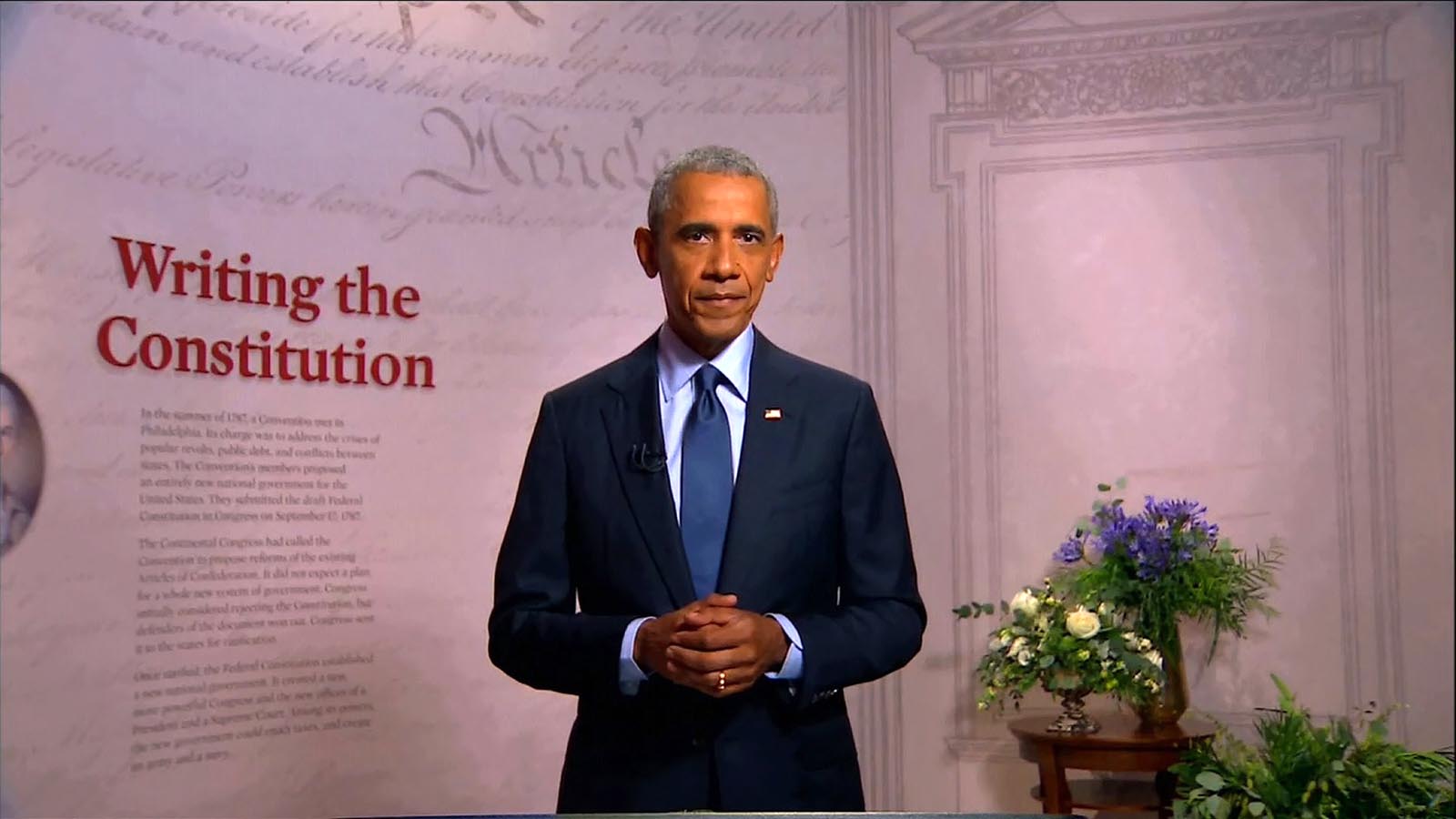
Former President Barack Obama’s speech to the 2020 Democratic National Convention, August 19, 2020:
Good evening, everybody. As you’ve seen by now, this isn’t a normal convention. It’s not a normal time. So tonight, I want to talk as plainly as I can about the stakes in this election. Because what we do these next 76 days will echo through generations to come.
I’m in Philadelphia, where our Constitution was drafted and signed. It wasn’t a perfect document. It allowed for the inhumanity of slavery and failed to guarantee women — and even men who didn’t own property — the right to participate in the political process. But embedded in this document was a North Star that would guide future generations; a system of representative government — a democracy — through which we could better realize our highest ideals. Through civil war and bitter struggles, we improved this Constitution to include the voices of those who’d once been left out. And gradually, we made this country more just, more equal, and more free.
The one Constitutional office elected by all of the people is the presidency. So at minimum, we should expect a president to feel a sense of responsibility for the safety and welfare of all 330 million of us — regardless of what we look like, how we worship, who we love, how much money we have — or who we voted for.
But we should also expect a president to be the custodian of this democracy. We should expect that regardless of ego, ambition, or political beliefs, the president will preserve, protect, and defend the freedoms and ideals that so many Americans marched for and went to jail for; fought for and died for.
I have sat in the Oval Office with both of the men who are running for president. I never expected that my successor would embrace my vision or continue my policies. I did hope, for the sake of our country, that Donald Trump might show some interest in taking the job seriously; that he might come to feel the weight of the office and discover some reverence for the democracy that had been placed in his care.
But he never did. For close to four years now, he’s shown no interest in putting in the work; no interest in finding common ground; no interest in using the awesome power of his office to help anyone but himself and his friends; no interest in treating the presidency as anything but one more reality show that he can use to get the attention he craves.
Donald Trump hasn’t grown into the job because he can’t. And the consequences of that failure are severe. 170,000 Americans dead. Millions of jobs gone while those at the top take in more than ever. Our worst impulses unleashed, our proud reputation around the world badly diminished, and our democratic institutions threatened like never before.
Now, I know that in times as polarized as these, most of you have already made up your mind. But maybe you’re still not sure which candidate you’ll vote for — or whether you’ll vote at all. Maybe you’re tired of the direction we’re headed, but you can’t see a better path yet, or you just don’t know enough about the person who wants to lead us there.
So let me tell you about my friend Joe Biden.
Twelve years ago, when I began my search for a vice president, I didn’t know I’d end up finding a brother. Joe and I came from different places and different generations. But what I quickly came to admire about him is his resilience, born of too much struggle; his empathy, born of too much grief. Joe’s a man who learned — early on — to treat every person he meets with respect and dignity, living by the words his parents taught him: “No one’s better than you, Joe, but you’re better than nobody.”
That empathy, that decency, the belief that everybody counts — that’s who Joe is.
When he talks with someone who’s lost her job, Joe remembers the night his father sat him down to say that he’d lost his.
When Joe listens to a parent who’s trying to hold it all together right now, he does it as the single dad who took the train back to Wilmington each and every night so he could tuck his kids into bed.
When he meets with military families who’ve lost their hero, he does it as a kindred spirit; the parent of an American soldier; somebody whose faith has endured the hardest loss there is.
For eight years, Joe was the last one in the room whenever I faced a big decision. He made me a better president — and he’s got the character and the experience to make us a better country.
And in my friend Kamala Harris, he’s chosen an ideal partner who’s more than prepared for the job; someone who knows what it’s like to overcome barriers and who’s made a career fighting to help others live out their own American dream.
Along with the experience needed to get things done, Joe and Kamala have concrete policies that will turn their vision of a better, fairer, stronger country into reality.
They’ll get this pandemic under control, like Joe did when he helped me manage H1N1 and prevent an Ebola outbreak from reaching our shores.
They’ll expand health care to more Americans, like Joe and I did ten years ago when he helped craft the Affordable Care Act and nail down the votes to make it the law.
They’ll rescue the economy, like Joe helped me do after the Great Recession. I asked him to manage the Recovery Act, which jumpstarted the longest stretch of job growth in history. And he sees this moment now not as a chance to get back to where we were, but to make long-overdue changes so that our economy actually makes life a little easier for everybody — whether it’s the waitress trying to raise a kid on her own, or the shift worker always on the edge of getting laid off, or the student figuring out how to pay for next semester’s classes.
Joe and Kamala will restore our standing in the world — and as we’ve learned from this pandemic, that matters. Joe knows the world, and the world knows him. He knows that our true strength comes from setting an example the world wants to follow. A nation that stands with democracy, not dictators. A nation that can inspire and mobilize others to overcome threats like climate change, terrorism, poverty, and disease.
But more than anything, what I know about Joe and Kamala is that they actually care about every American. And they care deeply about this democracy.
They believe that in a democracy, the right to vote is sacred, and we should be making it easier for people to cast their ballot, not harder.
They believe that no one — including the president — is above the law, and that no public official — including the president — should use their office to enrich themselves or their supporters.
They understand that in this democracy, the Commander-in-Chief doesn’t use the men and women of our military, who are willing to risk everything to protect our nation, as political props to deploy against peaceful protesters on our own soil. They understand that political opponents aren’t “un-American” just because they disagree with you; that a free press isn’t the “enemy” but the way we hold officials accountable; that our ability to work together to solve big problems like a pandemic depends on a fidelity to facts and science and logic and not just making stuff up.
None of this should be controversial. These shouldn’t be Republican principles or Democratic principles. They’re American principles. But at this moment, this president and those who enable him, have shown they don’t believe in these things.
Tonight, I am asking you to believe in Joe and Kamala’s ability to lead this country out of these dark times and build it back better. But here’s the thing: no single American can fix this country alone. Not even a president. Democracy was never meant to be transactional — you give me your vote; I make everything better. It requires an active and informed citizenry. So I am also asking you to believe in your own ability — to embrace your own responsibility as citizens — to make sure that the basic tenets of our democracy endure.
Because that’s what at stake right now. Our democracy.
Look, I understand why many Americans are down on government. The way the rules have been set up and abused in Congress make it easy for special interests to stop progress. Believe me, I know. I understand why a white factory worker who’s seen his wages cut or his job shipped overseas might feel like the government no longer looks out for him, and why a Black mother might feel like it never looked out for her at all. I understand why a new immigrant might look around this country and wonder whether there’s still a place for him here; why a young person might look at politics right now, the circus of it all, the meanness and the lies and crazy conspiracy theories and think, what’s the point?
Well, here’s the point: this president and those in power — those who benefit from keeping things the way they are — they are counting on your cynicism. They know they can’t win you over with their policies. So they’re hoping to make it as hard as possible for you to vote, and to convince you that your vote doesn’t matter. That’s how they win. That’s how they get to keep making decisions that affect your life, and the lives of the people you love. That’s how the economy will keep getting skewed to the wealthy and well-connected, how our health systems will let more people fall through the cracks. That’s how a democracy withers, until it’s no democracy at all.
We can’t let that happen. Do not let them take away your power. Don’t let them take away your democracy. Make a plan right now for how you’re going to get involved and vote. Do it as early as you can and tell your family and friends how they can vote too. Do what Americans have done for over two centuries when faced with even tougher times than this — all those quiet heroes who found the courage to keep marching, keep pushing in the face of hardship and injustice.
Last month, we lost a giant of American democracy in John Lewis. Some years ago, I sat down with John and the few remaining leaders of the early Civil Rights Movement. One of them told me he never imagined he’d walk into the White House and see a president who looked like his grandson. Then he told me that he’d looked it up, and it turned out that on the very day that I was born, he was marching into a jail cell, trying to end Jim Crow segregation in the South.
What we do echoes through the generations.
Whatever our backgrounds, we’re all the children of Americans who fought the good fight. Great grandparents working in firetraps and sweatshops without rights or representation. Farmers losing their dreams to dust. Irish and Italians and Asians and Latinos told to go back where they came from. Jews and Catholics, Muslims and Sikhs, made to feel suspect for the way they worshipped. Black Americans chained and whipped and hanged. Spit on for trying to sit at lunch counters. Beaten for trying to vote.
If anyone had a right to believe that this democracy did not work, and could not work, it was those Americans. Our ancestors. They were on the receiving end of a democracy that had fallen short all their lives. They knew how far the daily reality of America strayed from the myth. And yet, instead of giving up, they joined together and said somehow, some way, we are going to make this work. We are going to bring those words, in our founding documents, to life.
I’ve seen that same spirit rising these past few years. Folks of every age and background who packed city centers and airports and rural roads so that families wouldn’t be separated. So that another classroom wouldn’t get shot up. So that our kids won’t grow up on an uninhabitable planet. Americans of all races joining together to declare, in the face of injustice and brutality at the hands of the state, that Black Lives Matter, no more, but no less, so that no child in this country feels the continuing sting of racism.
To the young people who led us this summer, telling us we need to be better — in so many ways, you are this country’s dreams fulfilled. Earlier generations had to be persuaded that everyone has equal worth. For you, it’s a given — a conviction. And what I want you to know is that for all its messiness and frustrations, your system of self-government can be harnessed to help you realize those convictions.
You can give our democracy new meaning. You can take it to a better place. You’re the missing ingredient — the ones who will decide whether or not America becomes the country that fully lives up to its creed.
That work will continue long after this election. But any chance of success depends entirely on the outcome of this election. This administration has shown it will tear our democracy down if that’s what it takes to win. So we have to get busy building it up — by pouring all our effort into these 76 days, and by voting like never before — for Joe and Kamala, and candidates up and down the ticket, so that we leave no doubt about what this country we love stands for — today and for all our days to come.
Stay safe. God bless.

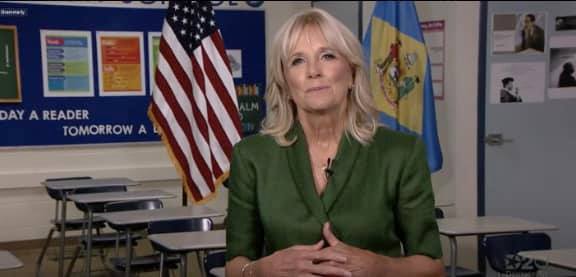
Jill Biden spoke at tonight’s DNC from Brandywine High School where she taught English.

Below is a transcript of Jill Biden’s prepared remarks during Tuesday’s Democratic National Convention speech. She spoke out of Brandywine High School, where she taught English in the the 1990s.

I have always loved the sounds of a classroom. The quiet that sparks with possibility just before students shuffle in. The murmur of ideas bouncing back and forth as we explore the world together. The laughter and tiny moments of surprise you find in materials you’ve taught a million times.

When I taught English here at Brandywine High School, I would spend my summer preparing for the school year about to start—filled with anticipation. But this quiet is heavy. You can hear the anxiety that echoes down empty hallways. There’s no scent of new notebooks or freshly waxed floors. The rooms are dark as the bright young faces that should fill them are now confined to boxes on a computer screen.

I hear it from so many of you: the frustration of parents juggling work while they support their children’s learning—or are afraid that their kids might get sick from school. The concern of every person working without enough protection. The despair in the lines that stretch out before food banks. And the indescribable sorrow that follows every lonely last breath when the ventilators turn off.

As a mother and a grandmother, as an American, I am heartbroken by the magnitude of this loss—by the failure to protect our communities—by every precious and irreplaceable life gone. Like so many of you, I’m left asking: how do I keep my family safe?

Healing a Family

You know, motherhood came to me in a way I never expected. I fell in love with a man and two little boys standing in the wreckage of unthinkable loss. Mourning a wife and mother—a daughter and sister.

I never imagined, at the age of 26, I would be asking myself: how do you make a broken family whole? Still, Joe always told the boys, “Mommy sent Jill to us,”—and how could I argue with her?

And so, we figured it out together—in those big moments that would go by too fast—

Thanksgivings and state championships, birthdays and weddings. In the mundane ones that we didn’t even know were shaping our lives: reading stories, piled on the couch. Rowdy Sunday dinners and silly arguments. Listening to the faint sounds of laughter that would float downstairs as Joe put the kids to bed every night—while I studied for grad school or graded papers under the pale yellow kitchen lamp—the dinner dishes waiting in the sink.

We found that love holds a family together. Love makes us flexible and resilient. It allows us to become more than ourselves—together. And though it can’t protect us from the sorrows of life, it gives us refuge—a home.

How do you make a broken family whole? The same way you make a nation whole. With love and understanding—and with small acts of kindness. With bravery. With unwavering faith.

You show up for each other, in big ways and small ones, again and again. It’s what so many of you are doing right now. For your loved ones. For complete strangers. For your communities.

There are those who want to tell us that our country is hopelessly divided—that our differences are irreconcilable. But that’s not what I’ve seen over these months.

We’re coming together and holding on to each other. We’re finding mercy and grace in the moments we might have once taken for granted. We’re seeing that our differences are precious and our similarities infinite.

We have shown that the heart of this nation still beats with kindness and courage. That’s the soul of America Joe Biden is fighting for now.

‘Why Joe Fights’

After our son, Beau, died of cancer, I wondered if I would ever smile or feel joy again. It was summer but there was no warmth left for me.

Four days after Beau’s funeral, I watched Joe shave and put on his suit. I saw him steel himself in the mirror—take a breath—put his shoulders back—and walk out into a world empty of our son. He went back to work. That’s just who he is.

There are times when I couldn’t imagine how he did it—how he put one foot in front of the other and kept going. But I’ve always understood why he did it.

…For the daughter who convinces her mom to finally get a breast cancer screening and misses work to drive her to the clinic.

…For the community college student who has faced homelessness and survived abuse—but finds the grit to finish her degree and make a good life for her kids.

…For the little boy whose mom is serving as a marine in Iraq, who puts on a brave face in his video call, and doesn’t complain when the only thing he wants for his birthday is to be with her.

…For all those people Joe gives his personal phone number to, at rope lines and events—the ones he talks to for hours after dinner—helping them smile through their loss—letting them know that they aren’t alone.

He does it for you.

Joe’s purpose has always driven him forward. His strength of will is unstoppable. And his faith is unshakable—because it’s not in politicians or political parties—or even himself. It’s in the providence of God. His faith is in you—in us.

Yes, so many classrooms are quiet right now. The playgrounds are still. But if you listen closely, you can hear the sparks of change in the air.

We just need leadership worthy of our nation. Worthy of you. Honest leadership to bring us back together—to recover from this pandemic and prepare for whatever else is next. Leadership to reimagine what our nation will be.

That’s Joe. He and Kamala will work as hard as you do, every day, to make this nation better. And if I have the honor of serving as your First Lady, I will too.

And with Joe as president, these classrooms will ring out with laughter and possibility once again.

The burdens we carry are heavy, and we need someone with strong shoulders. I know that if we entrust this nation to Joe, he will do for your family what he did for ours: bring us together and make us whole. Carry us forward in our time of need. Keep the promise of America, for all of us.